
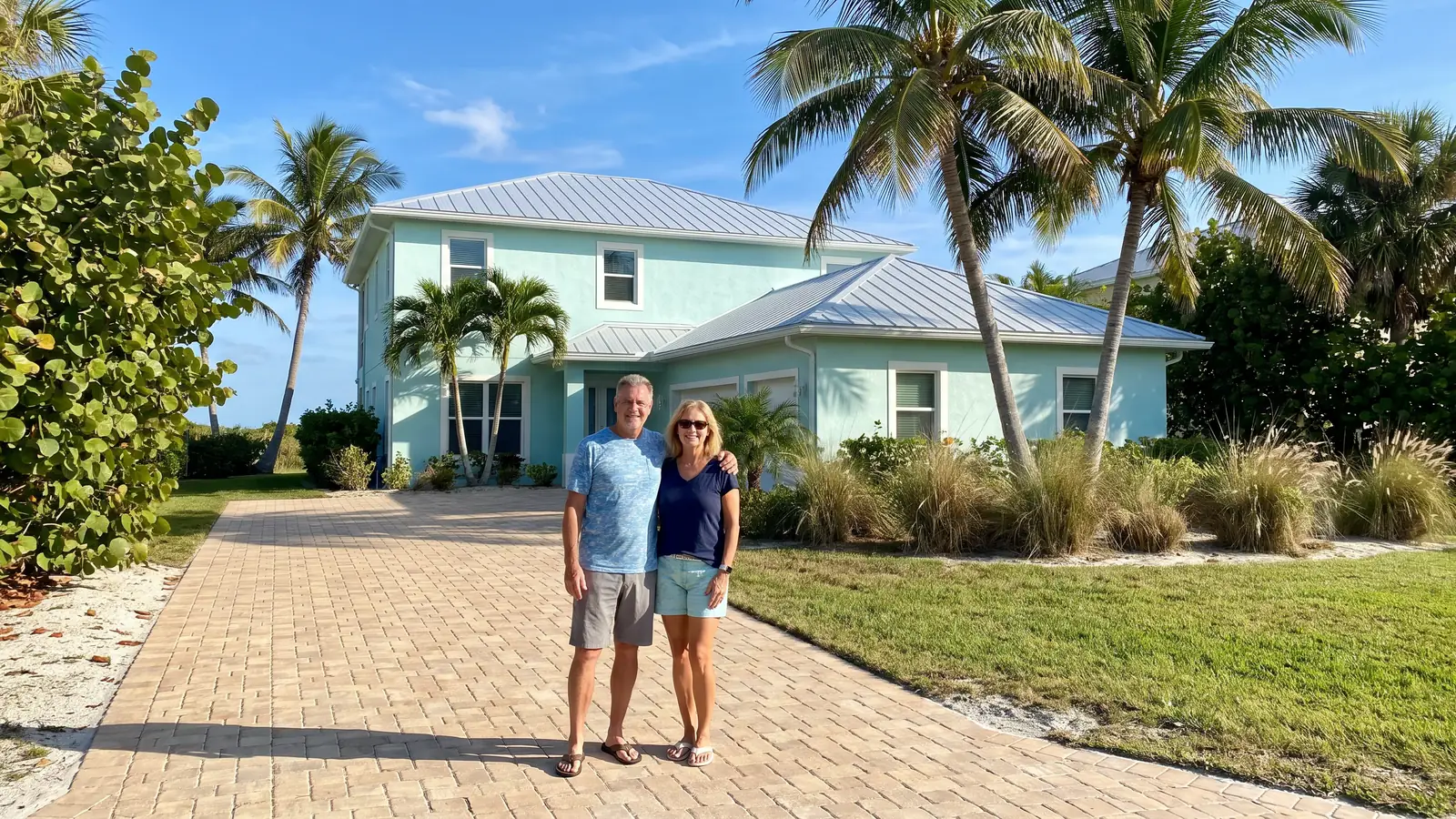
Paver sealing for Melbourne homes
Paver Sealing in Melbourne, FL
Melbourne pavers, from Crane Creek to the Eau Gallie Causeway, can look new again, so call (321) 364-3636 for an estimate.
- Brings out deeper paver color
- Fresh joint sand helps lock pavers in place
- Gives weeds less room to grow
- Makes the surface easier to keep clean
- Free estimate, no obligation
Request a Free Estimate
Free, no obligation.
Fast, careful paver sealing in Melbourne
Paver sealing in Melbourne starts with a free estimate for any driveway, pool deck, patio or walkway in the city. A local contractor washes the pavers, fills the joints again and applies the coats. A reply comes within 1 business day, usually much sooner, when you call (321) 364-3636.
Melbourne is a big city, so no two yards match. A walkway near the lagoon may turn green while a sunny drive loses color, and both can look fresh after a proper wash and coat. If you prefer to write, you can request a free quote and name your area.
Why hire a local paver sealing contractor in Melbourne?
Melbourne joined with Eau Gallie in 1969 and now spans lagoon shore, older downtown streets and a strip of beachside, so pavers meet different conditions from street to street. A local contractor can match the plan to your area, so request a free quote.
A free look first
The contractor measures and inspects your Melbourne pavers at no charge. You see a price before you commit to anything. No paperwork is due on the first visit.
Prices you can check
Space Coast companies commonly publish $1.85 to $4.00 per square foot to clean, sand and seal, and Melbourne companies list the same range. The estimate shows how your total was built.
Matte or wet look
Matte restores the natural look. A wet look brings out color but shows scuffs sooner, a fair trade on a patio and a harder one on a driveway. Samples help you decide.
No pressure
You choose the date, the finish and whether to hire anyone. An estimate in Melbourne carries no obligation. Ask your questions and say no if you like.
Get Your Free Estimate in Melbourne
Tell us about your pavers in Melbourne.
Free, no obligation
What paver problems show up most in Melbourne?
Salt air near the beaches
Melbourne's causeways run east to the Atlantic beaches, and a small beachside part of the city sits on the barrier island. One Melbourne paver company writes that salt air and coastal weather wear pavers out faster. The same company says beachside and high-sun properties may need sealing more often. If your home is on the beach side of the lagoon, ask about a shorter timeline between coats. Mainland streets west of the lagoon deal with sun and rain more than spray, so the right schedule depends on which side you are on. A quick description of your street tells the contractor where to start. Pool decks and lanai floors near the water can be treated on the same visit as the driveway.
Lagoon runoff and rinse water
About 80 percent of Melbourne's land drains toward the Indian River Lagoon, and the state has ordered cuts in nitrogen and phosphorus runoff. That is a good reason to treat rinse water with care. Ask how the contractor will handle it on your lot before the wash begins. A clear answer tells you the crew has thought about where the water goes. The wash is where most of the runoff comes from, so that step deserves the most attention. You can also ask which cleaners are used and whether the joint sand will be kept out of the street.
Older streets and unknown sealer
Melbourne was settled around 1867 and merged with Eau Gallie in 1969, so some streets are decades older than the pavers on them. Pavers on older lots may have been laid and sealed by several owners. Water-based sealer cannot go over solvent-based sealer, which means the contractor has to learn what is down. A small test spot can settle it. Sealer sits on top of the surface, so a mismatch can leave cloudy or patchy spots. Finding out first is cheaper than fixing it later.
Rain from late May to early October
Melbourne averages about 51 inches of rain a year, mostly from late May to early October. Sealer needs a dry surface, and one Florida paver company wants 24 hours of curing before rain. That makes midsummer the hardest stretch to schedule. Other months leave the contractor wider windows. Even in the drier months, a shaded patio under oaks or a screen enclosure may stay damp longer than the driveway. The contractor can check each surface with the same care. Ask for a spare date when you book, in case a shower interrupts.
Golf-community homes with shared rules
A Melbourne paver company names Baytree and Balmoral golf-community homes among the places it works. Communities like these often have a homeowners association. Check your rules about work hours, driveway color and finish before you pick a date. Matte sealer restores the natural look, which tends to be an easy match for community guidelines. If the rules say nothing about sealer, a quick note to the board can still save a surprise.
Does my part of Melbourne change the sealing plan?
Yes, because Melbourne is two older cities joined in 1969. Eau Gallie, on the north side, was its own city until the merger, and its arts district holds more than 30 murals. Historic Downtown Melbourne sits around Crane Creek and New Haven Avenue. Each side has older buildings and older pavers, so say which side you live on when you request a free quote.
Eau Gallie's historic area includes the Rossetter House Museum, the Ginter Building and the Roesch House. The Eau Gallie Causeway and the Melbourne Causeway carry traffic east to the beaches. Homes near either end sit closer to salt air. Call (321) 364-3636 and name your street, and the contractor can tell you what to expect.
Baytree and Balmoral are golf-community areas that one Melbourne paver company lists among the places it works. Communities like these often have homeowners association rules, so check yours before you set a date. Ask the contractor what to send the board, if anything. Call (321) 364-3636 and describe your street.
What does paver sealing cost in Melbourne?
A Melbourne paver company says paver sealing typically costs $1.85 to $4.00 per square foot, based on condition, square footage, sealer type, accessibility and prep work. Those same factors decide where a Melbourne job lands. A driveway with heavy staining will not price like a clean one of the same size, and a large pool deck adds square feet fast. For a number for your driveway, request a free quote.
One Melbourne company describes seven steps in its process: pretreat, clean, treat efflorescence, rinse again, sand the joints and apply two coats. More steps usually mean more time on site. Ask which steps are in your quote, and call (321) 364-3636 to compare quotes side by side.
| Paved area | Typical example | Clean, sand and seal |
|---|---|---|
| 300 sq ft | Small patio or walkway | $555 to $1,200 |
| 600 sq ft | Two car driveway | $1,110 to $2,400 |
| 1,000 sq ft | Large driveway or pool deck | $1,850 to $4,000 |
| 1,500 sq ft | Driveway plus pool deck | $2,775 to $6,000 |
Math based on the $1.85 to $4.00 per square foot that Space Coast paver companies publish. Your contractor sets the actual price after seeing the surface. Repairs, leveling and stripping failed sealer are usually extra.
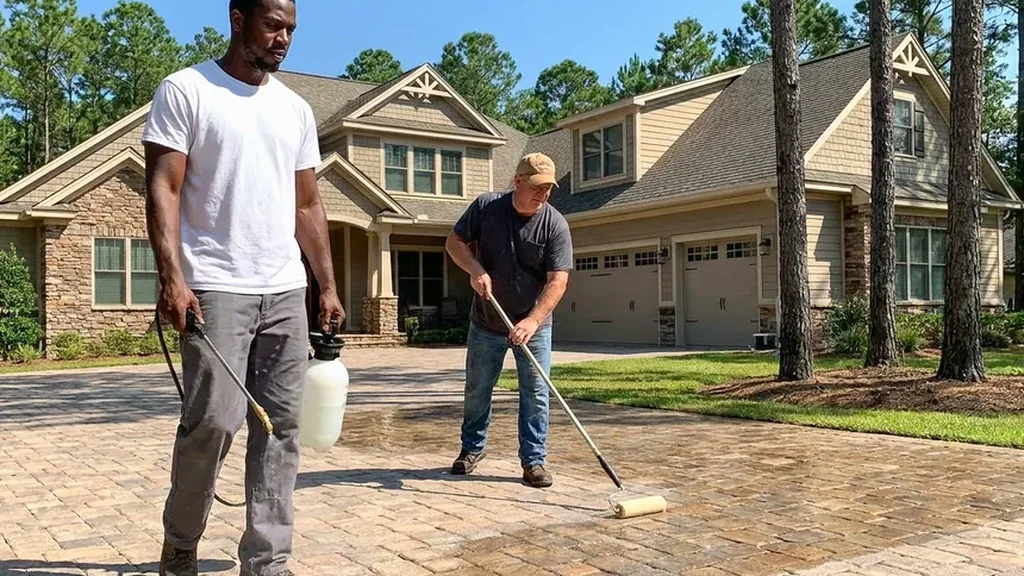
How does a paver sealing job work in Melbourne?
Inspect and pretreat
The contractor inspects the surface and applies a pretreatment to loosen grime and stains. In Melbourne that often means green film from shaded spots and salt haze near the beaches. Old sealer gets a closer look, since water-based sealer cannot go over solvent-based sealer. You hear the plan before anything gets wet. Take this chance to point out stains, low spots and any place where water stands after a storm.
Clean and treat efflorescence
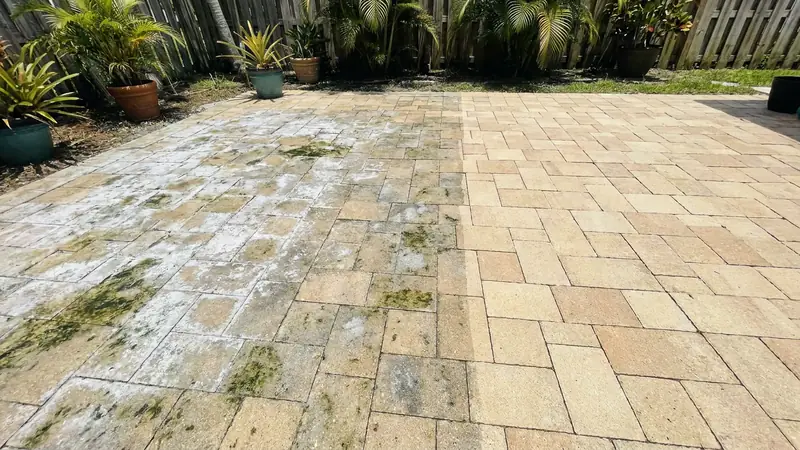
Next comes a full clean and rinse. White, chalky efflorescence gets its own treatment, and then the pavers are cleaned and rinsed again, as one Melbourne company describes it. Rinse water is directed with the lagoon in mind, because most of the city drains toward it. Rust and oil marks get a second look, and some fade more than others. Walkways and pool decks get washed in the same pass if they are in the quote.
Sand the joints
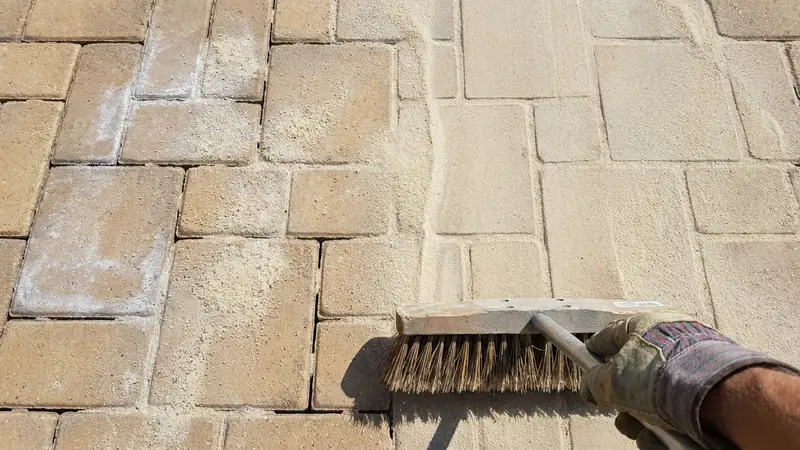
The wash takes joint sand with it, so each joint is refilled before sealing. Firm joints hold the pavers in place and leave less room for weeds. The sand is swept and packed, and loose grains are cleared off the surface so they do not stick in the coat. Low joints are topped up until the sand sits close to the top of each paver. Edges where the driveway meets the street get firmed up at the same time.
Let it dry out
Sealer needs a dry surface. Melbourne gets about 51 inches of rain a year, mostly from late May to early October, so the contractor watches the forecast. A patio in the shade can need longer to dry out. One Florida paver company puts the rain-free window after sealing at 24 hours. Should a shower roll in, the crew stops and returns when things dry out. Pavers that look dry on top can hold moisture in the joints, so the contractor checks more than the surface.
Two coats and a cure
Two coats of sealer go down, a first coat and a second coat. A wet look shows scuffs sooner than matte, so pick the finish for how you use the surface. Companies commonly quote two to five years between coats, and one Melbourne company says every two to three years is typical. The area is roped off while it cures, and you learn when cars and furniture can come back.
Complete paver services in Melbourne
A Melbourne job usually has seven moves: pretreat, clean, treat efflorescence, rinse, sand the joints and apply two coats. One Melbourne paver company lists those steps in that order. Doing them in order keeps dirt and salt from ending up under the sealer. Call (321) 364-3636 to find out which steps your pavers call for.
Melbourne pavers sit in many settings: driveways on quiet streets, pool decks near the lagoon, patios behind golf-course homes and walkways near the beach. One Melbourne company offers specialized pool deck sealers. Each surface gets its own prep. Say which one is yours when you request a free quote.
Sealer choice has two parts, the product and the finish. Water-based sealer cannot go over solvent-based sealer, so an old coat decides what goes on. Matte restores the natural look, and semi-gloss gives a wet look. Call (321) 364-3636 and ask to see both on a sample.
Weather is the schedule. Melbourne averages 51 inches of rain, mostly from late May to early October, and sealer needs dry pavers. The months outside that stretch leave the widest dry windows. Pick a date that suits your street when you request a free quote.
Questions to ask before you hire
- Will you rinse off the salt film and blown sand before the sealer goes down?
- What happens if an afternoon thunderstorm rolls in during the job?
- How do you tell that the pavers are dry enough to seal after a wash?
- How will you protect my screen enclosure, plants and pool water?
- Can you treat the rust stains my sprinkler water left behind?
- How many coats go down, and how long do you wait between them?
- When can cars, patio chairs and the dog go back on the surface?
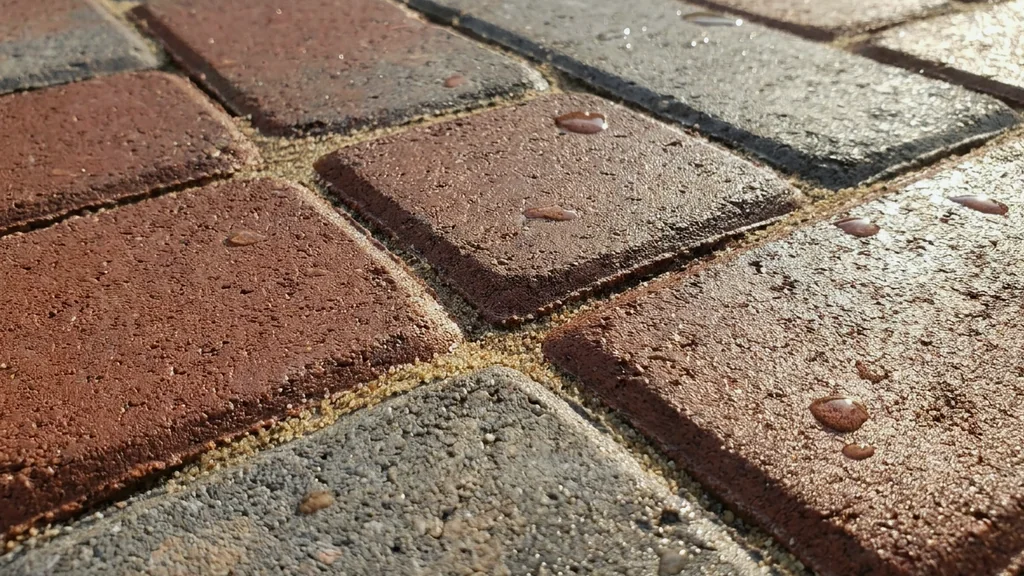
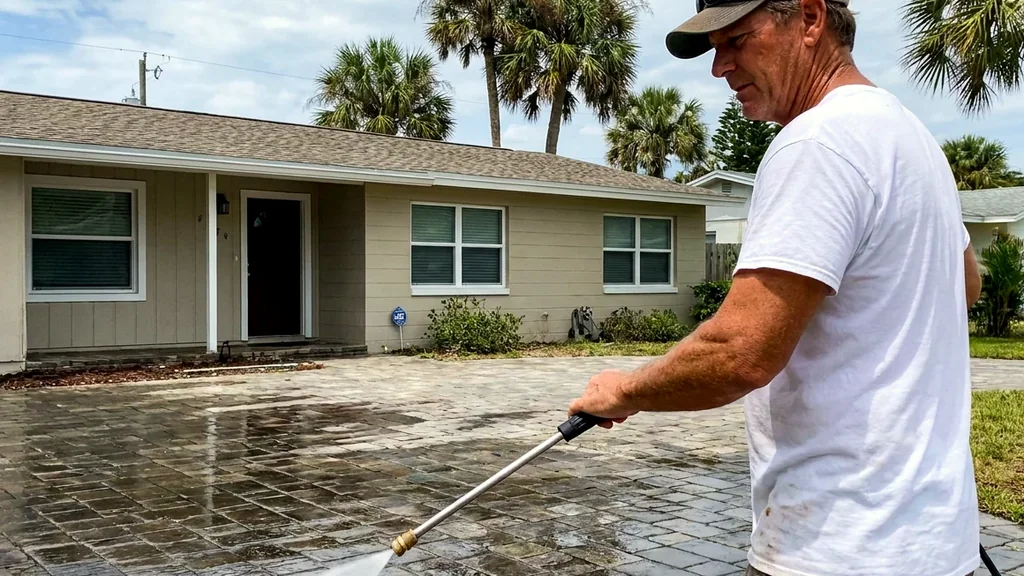
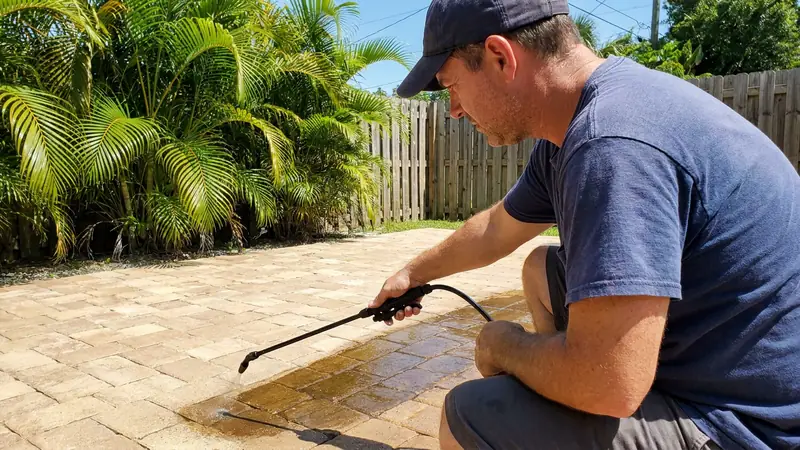
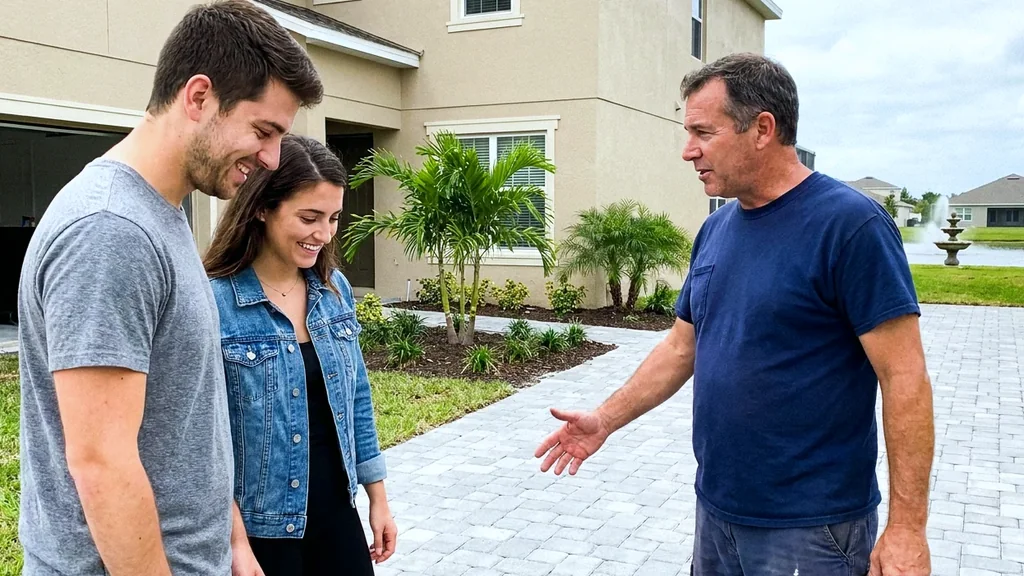
What do sealed pavers look like around Melbourne?
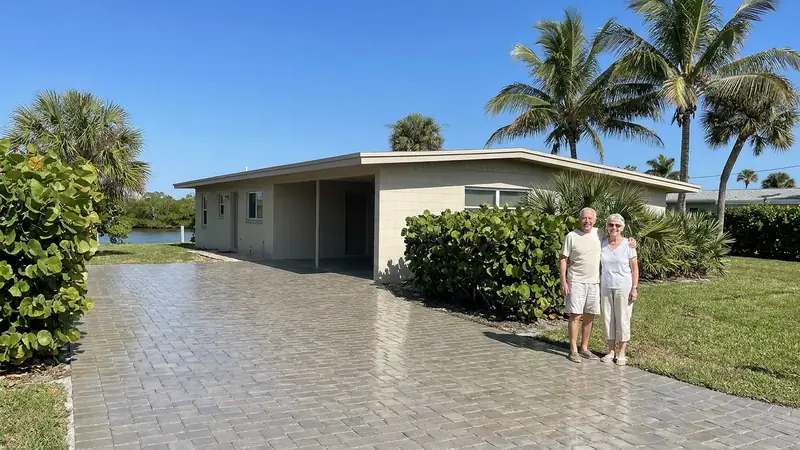
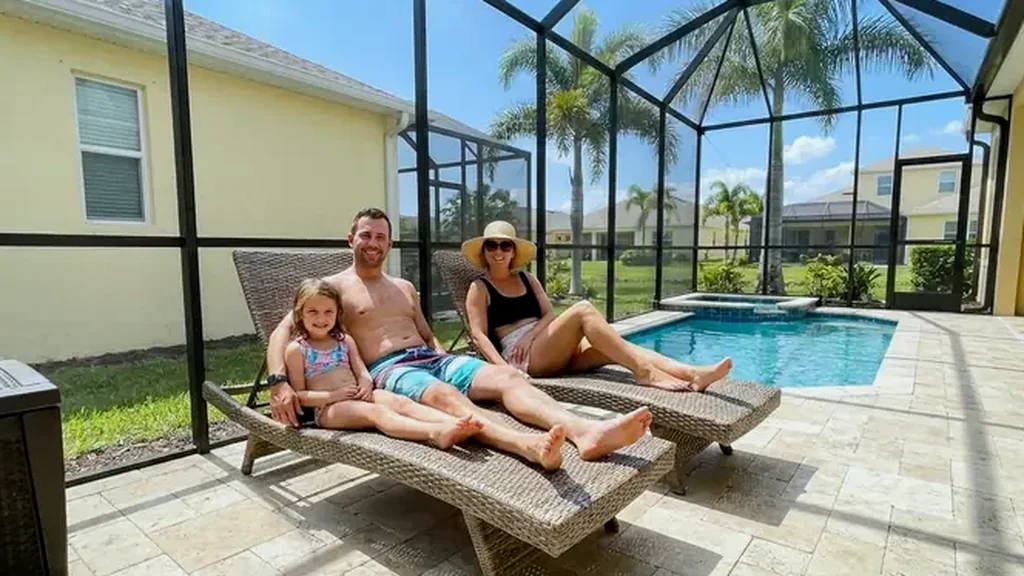
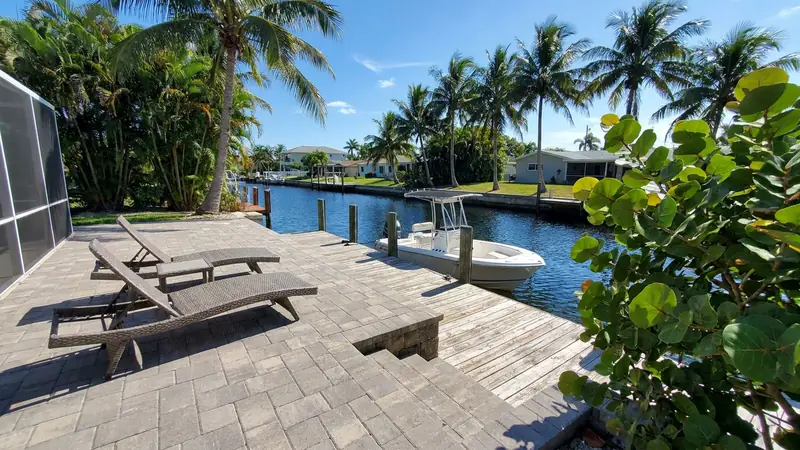
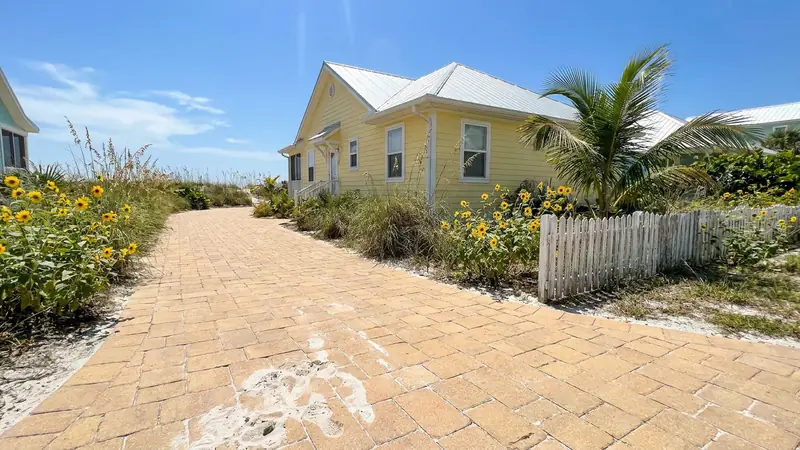
Why local matters in Melbourne
A contractor who works Melbourne knows the city is long, with beachside at one end and inland neighborhoods at the other. That affects salt, rain and how often a coat needs a refresh. It also affects drive time and scheduling. To reach a contractor who works across the city, call (321) 364-3636.
Local knowledge covers the lagoon too. About 80 percent of the city's land drains toward the Indian River Lagoon, so rinse water and sealer deserve care. A contractor who works here treats that as part of the job. You can request a free quote and ask how rinse water is handled on your lot.
Knowing Melbourne also means knowing how its housing mixes. Older Eau Gallie streets, downtown blocks near Crane Creek and golf communities such as Baytree and Balmoral each have their own habits. Ask for someone who has worked in your part of town. Call (321) 364-3636, and the first answer is free.
Does it matter that Melbourne is made of two old towns?
It does, because each town grew around its own waterfront. Melbourne grew along Crane Creek where it meets the Indian River, and Eau Gallie had its own port. Rail service reached both in 1893, and commerce moved to higher ground to the west. If you live near the old waterfronts, request a free quote.
In 1969, voters merged the two towns and chose the Melbourne name. A 1919 fire had already destroyed most of the original downtown along Front Street, and it was rebuilt west of US 1. Green Gables, a Queen Anne home from 1896, still overlooks a curve of the river. Call (321) 364-3636 and say how old your street is.
Frequently Asked Questions
How many years does a sealer coat last on Melbourne pavers?
A Melbourne paver company says every two to three years, and companies commonly quote two to five years between coats. Beachside or high-sun properties may need it more often. Flat color or thin joint sand are good signs to ask for a look. Ask the contractor to write the product and date on the invoice so the next coat is easy to plan.
How much does it cost to seal outdoor pavers in Melbourne?
Space Coast companies post $1.85 to $4.00 per square foot for cleaning, sanding and sealing. Condition, size, sealer type, access and prep work all move the final figure, according to a Melbourne company. Have the area written into each quote. A pool deck or walkway sealed at the same visit adds to the total.
Is there a downside to sealing pavers in Melbourne?
Sealer wears, so it needs a new coat every few years. A wet look shows scuffs sooner than matte, and sealer needs a dry surface, which can push a job back in the rainy months. Another catch is that water-based sealer cannot be put over an old solvent-based coat. These are things to plan for, and none rules sealing out. Asking about each one up front keeps the surprises small.
Do patio pavers need to be sealed in Melbourne?
Sealing is optional, but it helps a patio in Melbourne's salt air and summer rain. A Florida paver company says it hardens the sand joints and brings out color. A sealed joint also leaves less room for weeds to start. Ask about matte if you want less shine near the pool. Sealing also makes the next wash easier, since dirt sits on the surface instead of soaking in.
Can sealer go over old sealer on Melbourne pavers?
It depends on the old coat, since a water-based product will not go over a solvent-based one. The old product has to be identified before anything goes on. Older Melbourne lots may have had several owners, so a small test spot can answer the question. Keep any old receipt or product name you find, because it speeds up the decision.
How many coats of sealer do Melbourne pavers need?
Two coats is the usual answer. A Melbourne company applies a first and second coat, and a Florida paver company describes a flood coat and then a concentrated top coat. A Brevard company adds a third layer when you want more color or protection. Ask which one your quote covers before you sign. Each coat needs time to dry, so the job takes longer than one quick pass.
What should I ask a contractor before sealing my Melbourne pavers?
Start with what the price includes. One Melbourne company lists pretreatment, cleaning, efflorescence treatment, joint sanding and two coats. Ask whether the price is per square foot or one total, which sealer is used and what finish you will get. A written estimate that names each step is easier to compare than a single number.
Will sealing change the color of my Melbourne pavers?
It can deepen color or keep the natural look, depending on the finish. A Brevard company offers matte to restore the natural look and semi-gloss for a wet look. Another Florida company lists enhanced color as a benefit of sealing. Ask to see a small sample of each finish before you choose. Sun-faded pavers can look richer after a clean and a fresh coat.
Ready for a Free Estimate in Melbourne?
Call (321) 364-3636 and tell us about your pavers.
Free, no obligation